
Before the For Sale Sign Goes Up: 6 Ways to Get Your Rural Property Fall Market Ready
When most people hear the term “curb appeal,” they picture freshly painted front doors, manicured lawns, and colorful landscaping. But when you’re selling rural property, curb appeal looks a little different.
Whether you’re preparing to sell 10 acres, a hunting property, working farm, ranch, timber tract, or future homesite, first impressions still matter. In fact, with land, those first impressions often begin before a buyer ever schedules a showing.
As we head toward the fall land market in Oklahoma, late summer is one of the best times to prepare your property. Fields and timber are still green, daylight hours are long, and there’s time to make improvements and capture great photography before the seasons change.
The good news? You don’t need to spend a fortune. The goal isn’t to make rural property look manicured, it’s to make it easy for buyers to see, understand, and appreciate what makes the property valuable.
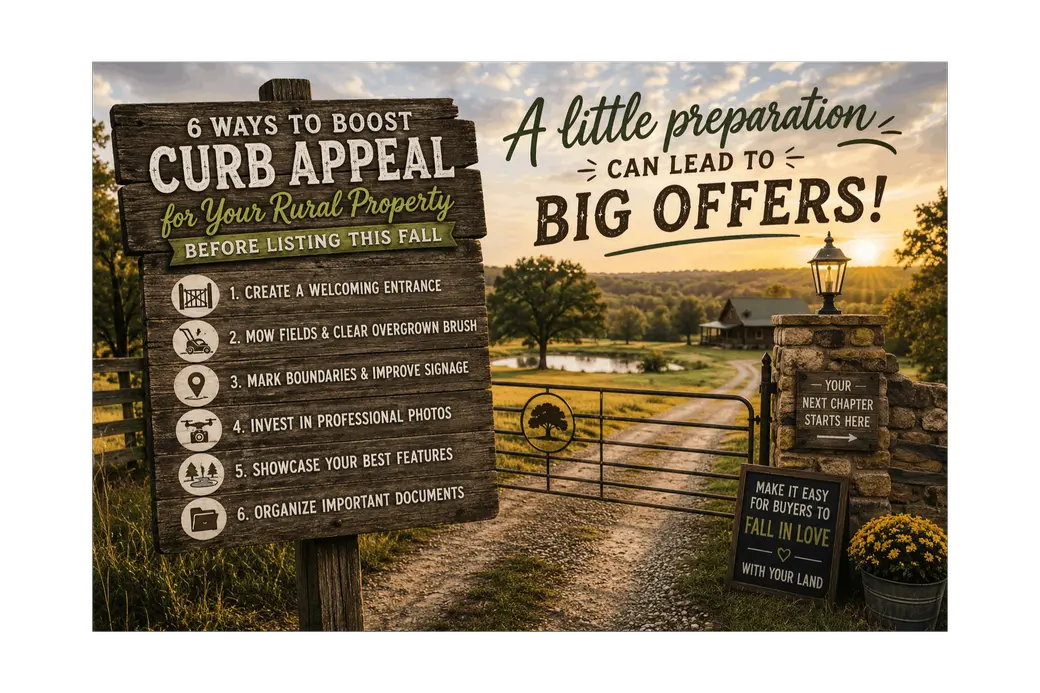
Here are six ways to improve your rural property’s curb appeal before putting it on the market this fall.
1. Start at the Gate
The entrance to a rural property sets the tone for everything that follows.
If a buyer arrives to an overgrown entrance, washed out driveway, broken gate, or potholes big enough to qualify as fishing ponds, they’re already forming an opinion about how well the property has been maintained.
Take a good look at the first several hundred feet of your property.
Consider:
Grading and adding gravel to the driveway, filling potholes and repairing washed out areas, trimming vegetation around the entrance, removing fallen limbs and debris, repairing or repainting gates, and making sure the address is clearly visible.
You don’t need a fancy entrance. Clean, accessible, and well maintained goes a long way.
2. Mow the Right Areas
One of the easiest ways to improve the appearance of acreage is simply helping buyers see it.
Tall grass and thick brush can hide some of a property’s best features and make it difficult for buyers to understand the layout.
Before listing, focus on mowing or clearing main roads and trails, potential building sites, pond and creek access, fence lines, food plots, scenic overlooks, and areas around barns, shops, or other improvements.
That doesn’t mean turning your hunting property into a golf course.
Mature timber, native grasses, thick bedding areas, and wildlife habitat may be exactly what your buyer wants. The goal is selective cleanup, not clearing everything in sight.
Think of it as giving buyers a good tour route through the property.
3. Make Property Boundaries Easy to Understand
One of the most common questions we hear when showing land is:
“Where exactly is the property line?”
Buyers want confidence that they understand what they’re purchasing.
If appropriate, consider marking corners, refreshing flagging along important boundary lines, and making existing survey pins easier to locate.
If you have a recent survey, have it ready. Property maps and aerial imagery showing approximate boundaries are also extremely valuable marketing tools.
Professional signage and directional signs can help buyers locate the property and reinforce that it is actively and professionally marketed.
The easier you make it for buyers to understand the property, the more productive your showings become.
4. Get Professional Photography While the Property Looks Its Best
When selling rural real estate, photography isn't just important, it can be one of the biggest factors determining whether someone clicks on your listing.
Land can be especially difficult to market through photographs because buyers need to understand both the beauty and the layout of the property.
That’s why we believe rural listings should use a combination of professional ground photography and aerial drone imagery whenever possible.
Drone photography can help showcase property boundaries, road frontage and access, ponds and creeks, timber and open pasture, building locations, trails, terrain changes, neighboring land uses, and nearby lakes, highways, or recreational areas.
Late summer can be an excellent time to capture these images while vegetation is still full and green.
And if the property has a great sunrise or sunset view? Don’t waste it. Those are often the photographs buyers remember.
5. Put Your Property’s Best Features Front and Center
Every rural property has a story.
Sometimes it’s a big fishing pond. Sometimes it’s mature white oak timber, a hidden creek, dramatic elevation changes, productive pasture, or a secluded ridge that would make an incredible homesite.
Whatever makes your property special, don’t make buyers hunt for it.
Walk the property and identify the features you would want to see if you were considering buying it.
That might include ponds, creeks and waterfalls, mature hardwood timber, rock formations, wildlife habitat, established trails, food plots, hunting blinds, pasture, building sites, views, barns, and shops.
Create easy access to those areas whenever practical.
A simple mowed trail leading to a pond, creek, or beautiful building site can completely change a buyer’s experience.
For recreational property, wildlife photos can also be extremely valuable. If you have quality trail camera pictures of deer, turkey, or other wildlife regularly using the property, save them.
Buyers aren't just purchasing acreage. They're purchasing what they believe they can do with it.
Help them see that potential.
6. Get Your Property Information Organized
Great presentation gets buyers interested. Good information gives them confidence to move forward.
Before listing your property, start gathering the documents and information buyers are likely to request.
Depending on the property, that may include surveys, legal descriptions, property tax information, easement documents, utility availability, water well information, septic or perc test information, fencing information, mineral or water rights information, conservation agreements, road maintenance agreements, and information about recent improvements.
Rural real estate can involve questions that simply don't come up with a typical house in town.
Can I build here? Where does the rural water line run? Who maintains the road? Is there an easement? Are there restrictions? Where are the boundaries?
The more of those questions we can answer before they become obstacles, the smoother the transaction can be.
Small Improvements Can Make a Big Difference
Preparing rural property for sale isn't about making it perfect.
It's about helping the right buyer recognize its potential.
A clean entrance, maintained trails, accessible property features, understandable boundaries, professional photography, and organized property information can completely change the way buyers experience your land.
And that matters.
Someone considering a rural property isn't simply calculating acres and price per acre. They're imagining where the house might sit, where their kids will fish, where they'll put cattle, where they'll hunt opening morning, or where they'll spend Saturday evenings around a fire.
Our job is to help them see it.
If you're considering selling acreage, a farm, ranch, hunting property, recreational tract, or rural home in Oklahoma this fall, now is the time to start preparing.
At White Oak Real Estate Group, rural real estate isn't simply another category of property we sell. It's a lifestyle we know, understand, and live ourselves.
Thinking about selling your land? Contact White Oak Real Estate Group for a property review and a marketing strategy built specifically for rural Oklahoma real estate.
Rooted in Faith. Built on Relationships.
We don't just market the lifestyle. We live it.